
Why It Matters
Millions of people use medications such as Ozempic, Wegovy, Mounjaro and Zepbound to manage type 2 diabetes or obesity.
The FDA has announced that manufacturers of all GLP-1 receptor agonist medications must add warnings about a potential increased risk of a rare eye condition called non-arteritic anterior ischemic optic neuropathy (NAION).
NAION can cause sudden, painless vision loss in one eye, sometimes permanently.
But how much does the medication actually increase the risk? Does the concern apply to every drug in the class? And should patients consider stopping treatment?
We examined the FDA's findings and the available scientific evidence.
1. What is NAION?
NAION occurs when blood flow to the front portion of the optic nerve is reduced, causing damage to the nerve that carries visual information from the eye to the brain.
It is sometimes described as an "eye stroke."
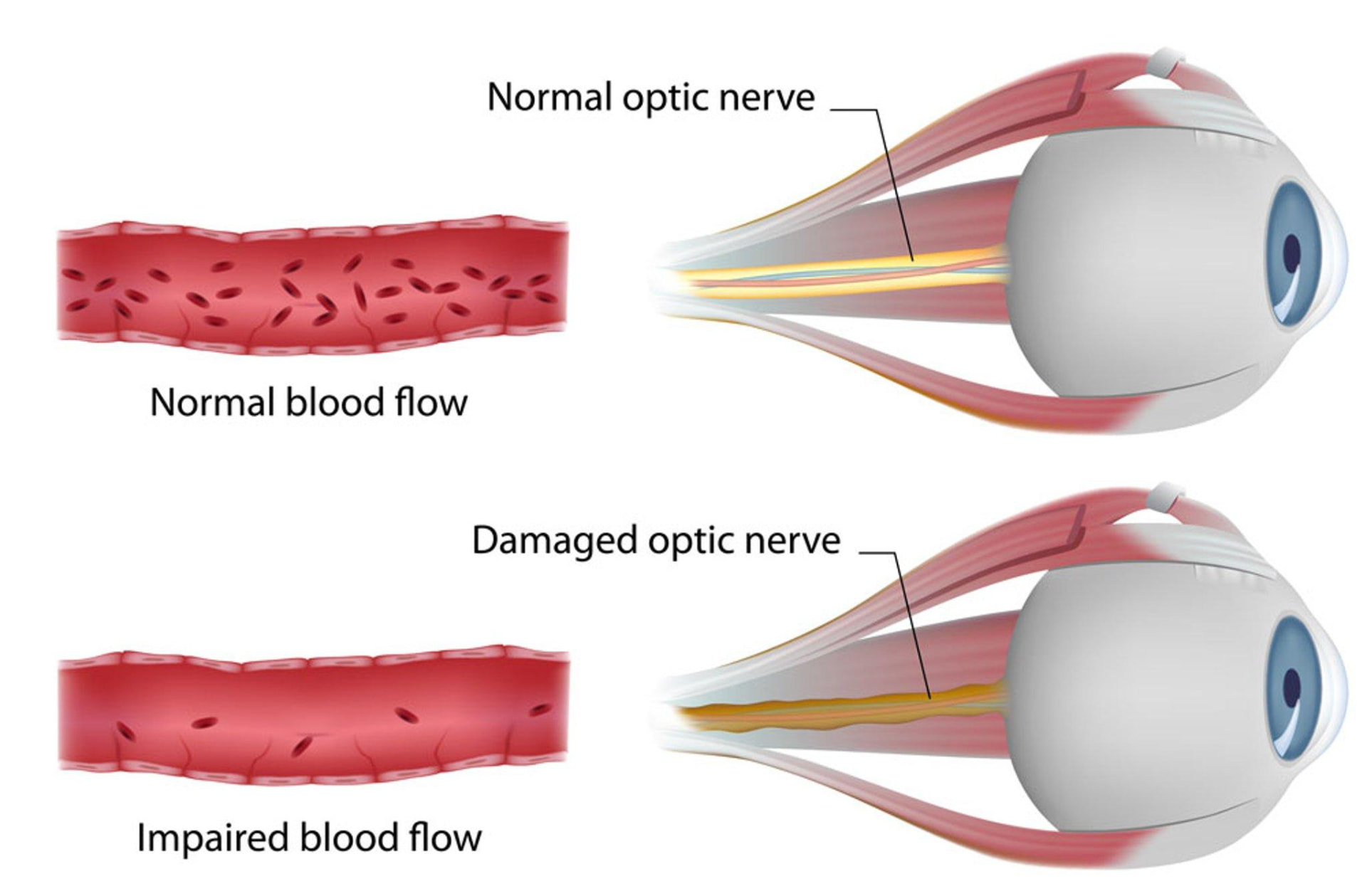
Unlike many eye conditions that develop gradually, NAION typically causes sudden, painless vision changes, often noticed upon waking.
Symptoms can include:
- Sudden vision loss in one eye.
- Blurred or hazy vision.
- Missing portions of the visual field or blind spots.
- Changes in color perception.
- Reduced sharpness of central vision.
Vision loss can be permanent. There is currently no reliably established treatment that restores vision lost from NAION.
IMPORTANT: Sudden vision loss in one eye requires immediate medical assessment. Do not wait for a routine appointment.
2. What did the FDA actually find?
The FDA evaluated several sources of evidence, including clinical trials, observational studies, animal research, postmarketing reports and published case reports.
Two major analyses are particularly important.
A. Analysis of 126 clinical trials
The FDA combined data from 126 randomized controlled trials involving:
- 78,217 patients receiving GLP-1 medications.
- 56,036 patients receiving placebo or other comparator medications.
- 288,879 patient-years of exposure.
Researchers identified 15 probable NAION cases:
- 10 among GLP-1 medication users.
- 5 among comparator patients.
The resulting incidence rates were:
| Treatment group | NAION cases per 100,000 patient-years |
|---|---|
| GLP-1 medications | 6.4 |
| Comparators | 3.8 |
That represents an absolute difference of approximately 2.6 additional cases per 100,000 patient-years.
To put that into perspective, if the difference represents a genuine causal effect, it would correspond to approximately one additional case for every 38,500 patient-years of treatment.
This is a very small absolute difference.
However, only 15 probable cases were identified. The small number makes the estimate uncertain, and the trials were not originally designed to investigate NAION.
B. FDA real-world study
The FDA also examined medical records of adults with type 2 diabetes who started different diabetes medications between 2019 and 2024.
It compared GLP-1 medications with:
- SGLT-2 inhibitors.
- DPP-4 inhibitors.
The results were:
| Medication comparison | Hazard ratio | Result |
|---|---|---|
| GLP-1 vs. SGLT-2 | 1.19 | No statistically significant increase |
| GLP-1 vs. DPP-4 | 1.43 | Statistically significant increase |
The confidence interval for the first comparison was 0.91–1.54, meaning the data did not establish an increased risk compared with SGLT-2 inhibitors.
For the second comparison, the confidence interval was 1.02–2.01, indicating a statistically significant association.
These are observational findings, not proof that the medication caused the condition.
Importantly, the results were not consistent across both comparisons.
3. What does the wider scientific literature show?
The concern initially gained attention following a 2024 study published in JAMA Ophthalmology.
That study examined patients receiving semaglutide and reported a substantially higher incidence of NAION than in matched comparison groups.
However, the research was conducted at a specialized neuro-ophthalmology center. Its patient population and design limit how confidently the results can be generalized to the wider population.
In 2026, the American Academy of Ophthalmology and the North American Neuro-Ophthalmology Society published a joint consensus statement reviewing the available evidence.
Their assessment was that:
- Several observational studies suggest a possible increased risk.
- Some studies find no significant association.
- Much of the evidence comes from retrospective research.
- The absolute risk remains low.
- Decisions about starting, continuing or stopping treatment should involve patients and their healthcare professionals.
There is also conflicting randomized-trial evidence.
A 2026 pooled analysis published in the British Journal of Ophthalmology examined 96,829 participants in clinical trials of semaglutide and liraglutide.
It found approximately three confirmed NAION cases per 100,000 patient-years among GLP-1 users, compared with approximately six among placebo users.
The authors did not find evidence of an increased risk.
An important qualification: this analysis covered products manufactured by Novo Nordisk, and several authors disclosed employment or financial relationships with the company.
The different findings illustrate why the evidence needs careful interpretation.
The association has not been definitively established as causal.
4. Does this apply to all GLP-1 medications?
The FDA is requiring labeling changes across the GLP-1 drug class.
The FDA list includes:
- Ozempic and Wegovy (semaglutide).
- Rybelsus (oral semaglutide).
- Mounjaro and Zepbound (tirzepatide).
- Trulicity (dulaglutide).
- Victoza and Saxenda (liraglutide).
- Other approved products, including orforglipron.
Tirzepatide is technically a dual GIP/GLP-1 receptor agonist.
One important qualification: reports of NAION across multiple products do not establish that every drug carries the same degree of risk.
Much of the published research has focused on semaglutide.
The FDA's broader warning reflects its assessment of available class-wide evidence, not equally strong drug-specific evidence for every medication.
5. Who might be more vulnerable?
NAION is associated with several established risk factors, including:
- Older age.
- Diabetes.
- High blood pressure.
- Obstructive sleep apnea.
- Smoking.
- Anemia.
- Kidney disease.
These factors are important because many people taking GLP-1 medications already have one or more of them.
This creates a challenge for researchers: separating the effects of the medication from the underlying health conditions that led to its prescription.
People who have already experienced NAION are at increased risk of developing it in the other eye.
6. Should patients stop taking GLP-1 medications?
Not simply because of this announcement.
The FDA has not recommended that everyone taking these medications discontinue treatment.
These drugs have demonstrated important benefits for appropriately selected patients, including cardiovascular and metabolic benefits.
For some patients, stopping treatment could mean losing meaningful protection against diabetes-related complications, cardiovascular disease or other conditions.
The FDA advises patients who develop NAION to discuss whether to continue or discontinue their medication with their healthcare professional.
For healthcare professionals, the FDA advises considering discontinuation in patients who develop NAION unless the benefits of treatment clearly outweigh the risks.
The practical message:
Patients should understand the warning, recognize symptoms and discuss their individual risk with their prescribing professional.
They should not independently stop treatment based solely on this announcement.
7. What should patients watch for?
IMPORTANT SAFETY WARNING
If you take a GLP-1 medication, be alert to:
- Sudden vision loss in one eye.
- New blind spots or missing areas of vision.
- Sudden blurred or hazy vision.
- Unexpected changes in color perception.
These symptoms warrant immediate medical evaluation and prompt referral to an ophthalmologist.
Do not assume the symptoms will resolve on their own.
The Watchdog Takeaway
EVIDENCE: MODERATE
The FDA's decision to require additional safety labeling is supported by a combination of clinical-trial findings and observational research.
There is a credible safety signal, but the evidence does not establish a definitive causal relationship.
Three points deserve particular attention:
1. THE ABSOLUTE RISK APPEARS VERY SMALL.
The FDA's clinical-trial analysis found 6.4 cases per 100,000 patient-years among GLP-1 users, compared with 3.8 among comparator patients.
2. THE ASSOCIATION IS NOT EQUALLY ESTABLISHED FOR EVERY MEDICATION.
Semaglutide has received the most research attention, while the FDA's warning extends across the drug class.
3. THE BENEFITS STILL MATTER.
For patients receiving substantial cardiovascular, kidney or metabolic benefits, the decision must weigh those benefits against a potentially increased risk of a rare but serious eye condition.
The responsible response is neither to dismiss the warning nor to create unnecessary alarm.
Patients deserve to know what the evidence shows, what remains uncertain and what symptoms require urgent attention.
OUR POSITION:
Awareness, informed decisions and prompt evaluation of symptoms are warranted.
A blanket recommendation to stop these medications is not supported by the available evidence.
Evidence & Confidence
Evidence assessment: MODERATE
The FDA's labeling decision rests on clinical-trial data, observational studies, animal research and postmarketing reports. The absolute increase found in the trials is very small, only 15 probable cases were identified, and the real-world comparisons did not agree with one another.
A 2026 pooled randomized-trial analysis found no increased risk. The association has not been definitively established as causal, and drug-specific evidence is not equally strong across the class.
Sources and Further Reading
KNOW SOMEONE WHO SHOULD SEE THIS?
If this information could help someone you know, share this alert with them.