As we get older, certain truths become harder to ignore.
People we love change. Children grow up and build lives of their own. Careers end. Friends move away. Parents and siblings are no longer here. Our bodies change. Houses are eventually sold, possessions given away, and familiar places sometimes become almost unrecognizable.
And yet, throughout our lives, we naturally talk about things as though they belong to us.
My home.
My family.
My career.
My health.
My plans.
My things.
There is nothing wrong with caring about these things. In fact, caring is part of what makes life meaningful.
But perhaps there is a difference between loving something and believing we can keep it.
Aging makes impermanence personal
When we’re young, impermanence can feel like an abstract idea.
We know intellectually that life changes, but we tend to live as though there will always be more time.
Later in life, the truth becomes more visible.
A friend passes away. Someone you love develops health problems. Retirement changes your daily life. You move from a home you’ve lived in for decades. You realize that some experiences you once took for granted may not always be available to you.
This can bring sadness.
But it can also bring something unexpected:
clarity.
When we understand that something won’t last forever, we may begin to appreciate it more deeply while it is here.
A morning walk.
A conversation with an old friend.
A meal shared with someone we love.
The ability to travel.
A favorite song.
Sitting outside on a beautiful evening.
None of these things needs to last forever to be valuable.
In fact, their impermanence may be part of what makes them precious.
We can suffer twice
Loss has its own pain. No philosophy can eliminate that.
But sometimes we add another layer of suffering by trying to make reality different from what it is.
We think:
This shouldn’t be happening.
This wasn’t supposed to change.
I should still be able to do what I used to do.
They were supposed to be here.
This was supposed to last.
The first pain comes from the change itself.
The second comes from fighting the fact that change has happened.
This doesn’t mean we should simply accept everything passively. There are many things worth fighting for, protecting, improving and changing.
But there are also things we eventually have to release.
Wisdom may partly be learning to tell the difference.
Holding life with open hands
There is a difference between letting go and not caring.
Not caring is easy.
You can protect yourself from loss by refusing to become attached to anything. But that also means refusing much of what makes life worth living.
Open-handed living is different.
It means caring deeply without demanding permanence.
It means saying:
I will enjoy this while I have it.
I will care for the people I love without pretending I control their lives.
I will make plans, but I won’t demand that life follow them exactly.
I will appreciate what my body can do rather than spending all my time mourning what it once could do.
I will allow life to change without automatically deciding that something has gone wrong.
That’s not resignation.
It’s participation without possession.
What do we actually keep?
This is where getting older can offer a remarkable perspective.
You may no longer have the job you once had, but you still have what that experience taught you.
You may no longer live in the house where your children grew up, but the life you lived there remains part of your story.
You may have lost someone you loved, but knowing them changed you.
You may have made mistakes decades ago that you would never repeat today. Those mistakes became part of the person you became.
You may have experienced difficult periods you wouldn’t choose to relive, yet discovered strength, patience or wisdom you couldn’t have gained any other way.
What remains isn’t ownership.
It’s transformation.
Life leaves fingerprints on us.
Every relationship, every place, every failure, every success and every ordinary Tuesday morning contributes something to the person we eventually become.
Your life is still yours to shape
There is another important lesson here.
Accepting impermanence doesn’t mean giving up your independence.
Quite the opposite.
We cannot control everything that happens to us, but we still have considerable influence over how we respond.
We can decide what deserves our attention.
We can decide which relationships we nurture.
We can continue learning.
We can take care of our bodies.
We can simplify our lives.
We can try something completely new at seventy.
We can let go of possessions that no longer serve us.
We can stop living according to expectations that belonged to an earlier version of ourselves.
We can become less interested in impressing people and more interested in actually living.
There is freedom in realizing that you don’t have to preserve the person you were twenty, thirty or forty years ago.
You are allowed to keep becoming.
The journey is the part that matters
Perhaps the goal isn’t to accumulate a life that we can somehow hold onto forever.
Perhaps it’s to experience one fully.
We won’t keep every possession.
We won’t keep every relationship.
We won’t keep every ability.
We won’t keep every season of life.
And eventually, we won’t keep the journey either.
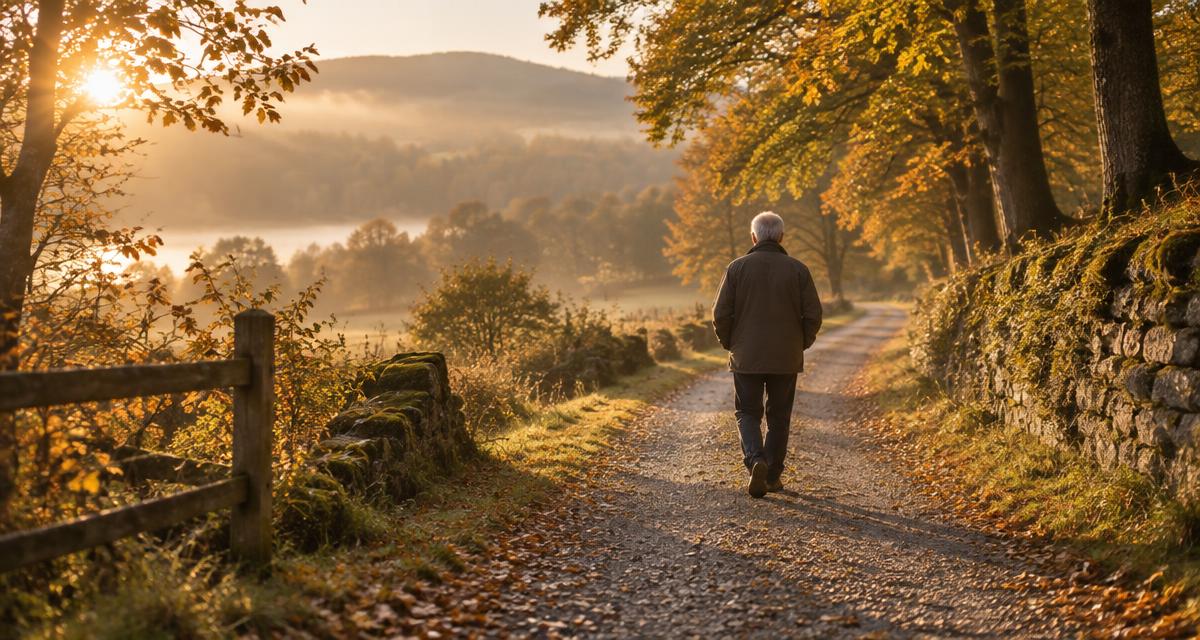
But while we’re here, we get to walk it.
We get to choose how we spend our time.
Who we spend it with.
What we learn.
What we give.
What we let go of.
That may be one of the great opportunities of growing older:
the opportunity to become less concerned with holding onto life and more interested in actually living it.
So love the people who are here.
Enjoy the good days.
Take care of what matters.
Make plans.
Stay curious.
Laugh whenever you can.
Grieve when you need to.
And when something changes that you cannot change, don’t automatically assume that life has failed you.
Sometimes a chapter ends simply because it has been lived.
Nothing belongs to us forever.
But while we’re here, we can experience it, appreciate it, learn from it—and allow it to change us.
We may not get to keep the journey.
But we get to walk it.
Walk it well.